Accidents keep happening
Go back to 30–45 minute trips and shrink the puppy zone. Most “stubborn” puppies are simply unsupervised. Clean with enzyme cleaner, never ammonia.
Help
Most setbacks are schedule gaps, not stubbornness. Tighten the interval, shrink the space, and keep rewards honest. Call your veterinarian if straining, blood, drinking changes, or a sudden crash in a previously reliable puppy.
Go back to 30–45 minute trips and shrink the puppy zone. Most “stubborn” puppies are simply unsupervised. Clean with enzyme cleaner, never ammonia.
Wait two quiet minutes, return inside, crate for 10–15 minutes, try again. Raincoats, a different patch of grass, or going out before play can help.
The crate is probably too large, the last trip was too late, or bedding is soaking up messes. Remove extra space, add a trip, use washable pads.
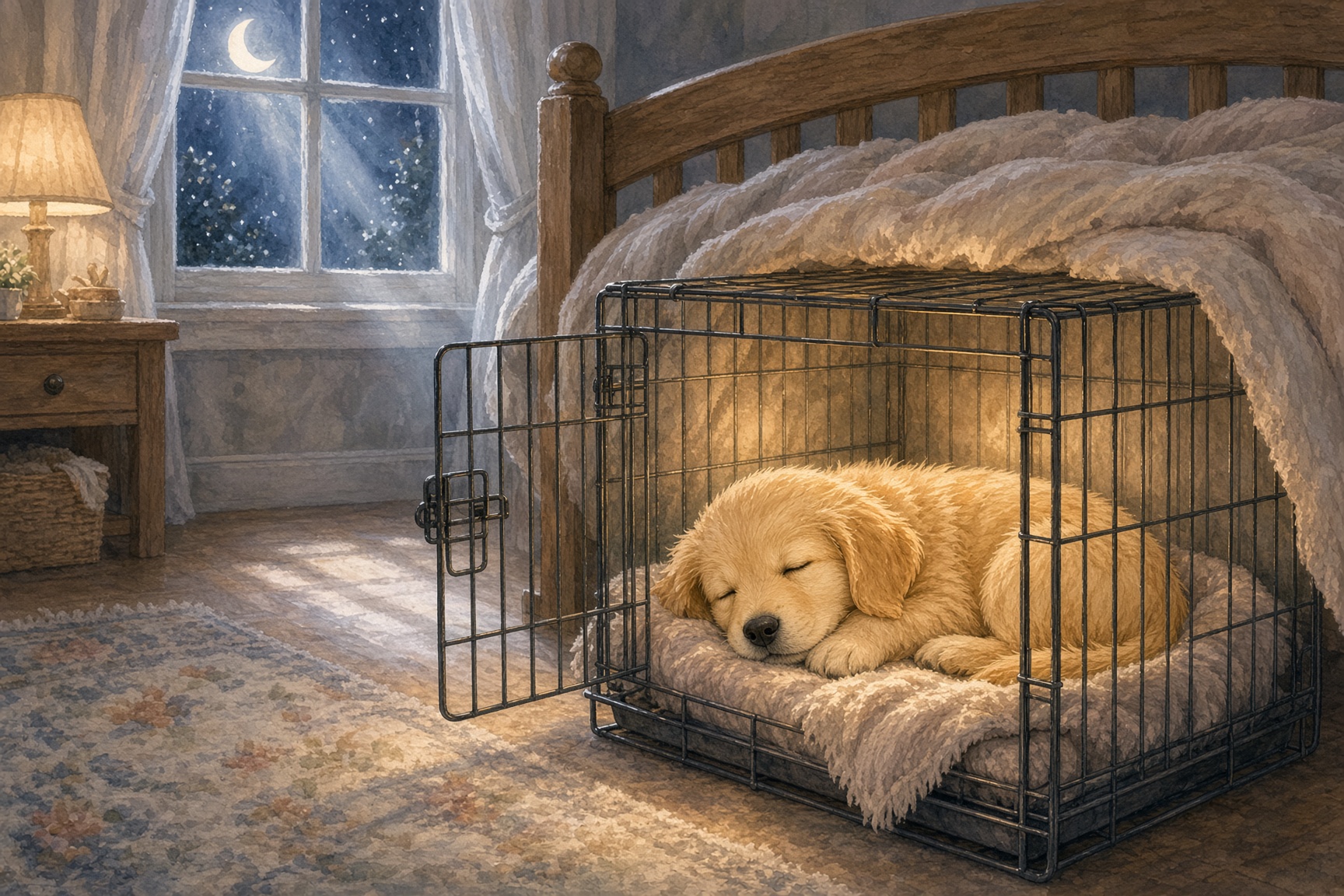
Last water earlier, last trip later, crate beside the bed. Take them out on a leash with zero play. If waking is extreme or they strain, call your vet.
Arousal resets the clock. Return to Day 1 intervals for 48 hours, then stretch again.
Usually a sign they were scolded. Rebuild trust: more supervision, more outdoor jackpots, no punishment.
Keep the same door, cue, and crate until dry days stack up. Add rooms one at a time. Fade food rewards slowly. Practice in new places only as vaccinations allow. The puppy who succeeded this week still needs the map next week — just with a little more freedom, earned.