Sniffing
A sudden, busy nose on floors or rugs, especially after play.
The method
Housetraining is not a mystery. It is a small map: one door, one patch of grass, a crate that feels safe, and a human who is paying attention. Gather the kit, learn the signals, then start Day 1.

A young puppy cannot “ask with words.” They show you with their body. Teach every person in the house these tells.
A sudden, busy nose on floors or rugs, especially after play.
Tight turns in one place, often right before a squat.
Staring, pawing, or wandering toward the exit you always use.
They stop a game, look distracted, or whine for no obvious toy reason.
You do not need gadgets. You need tools that make the right choice easy.
Crate
Just large enough to stand, turn, and lie down. Use a divider as they grow.
Leash and collar or harness
For walking the same route to the same potty spot, even in the yard.
High-value treats
Soft, tiny, and more exciting than kibble so the outdoor payoff is obvious.
Enzyme cleaner
Removes urine scent. Soap and steam alone leave an invisible invitation.
Timer
Phone alarms every 30–90 minutes. Do not rely on memory this week.
Gate or playpen
A small puppy zone you can actually watch. Whole-house access comes later.
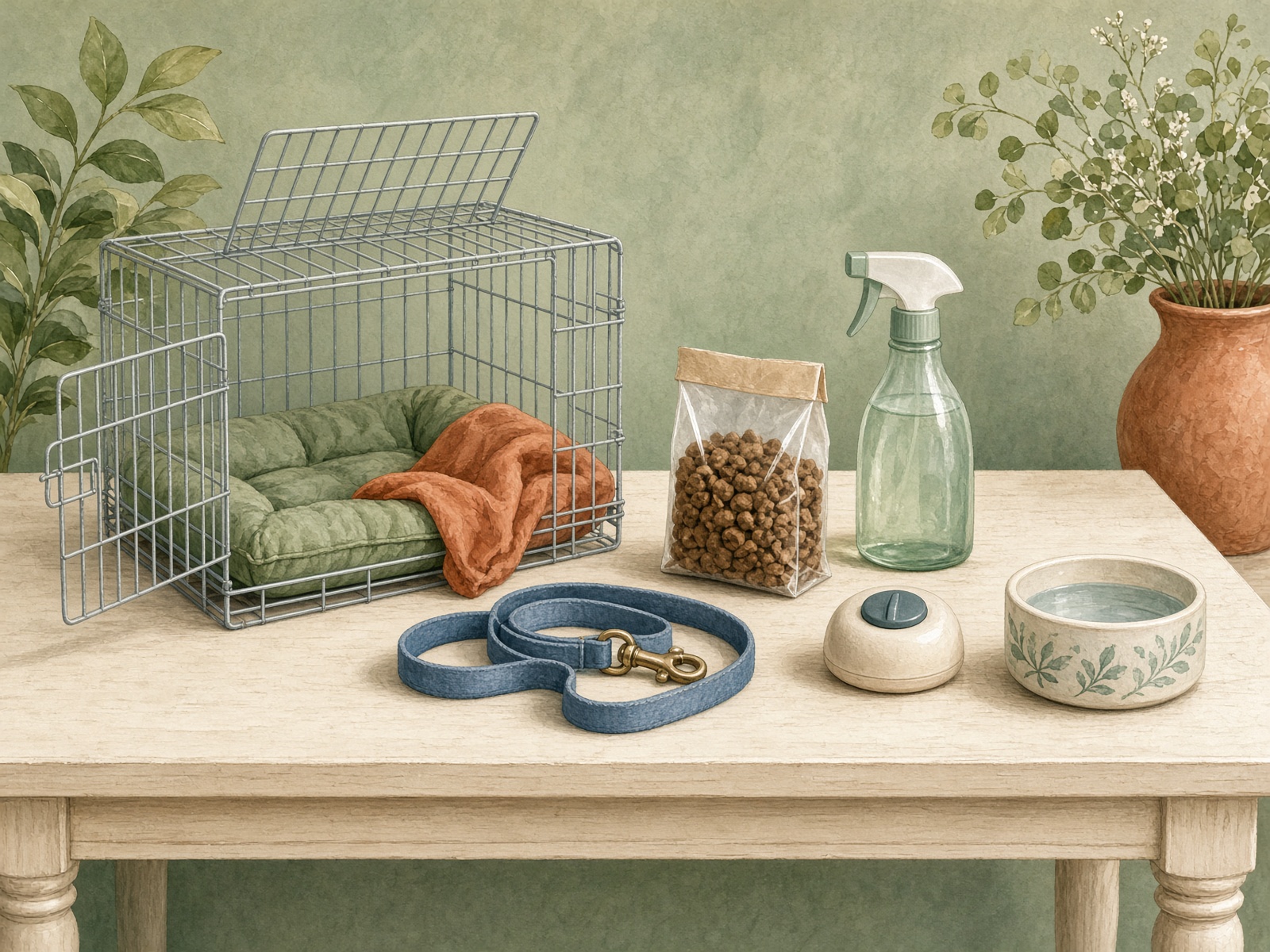
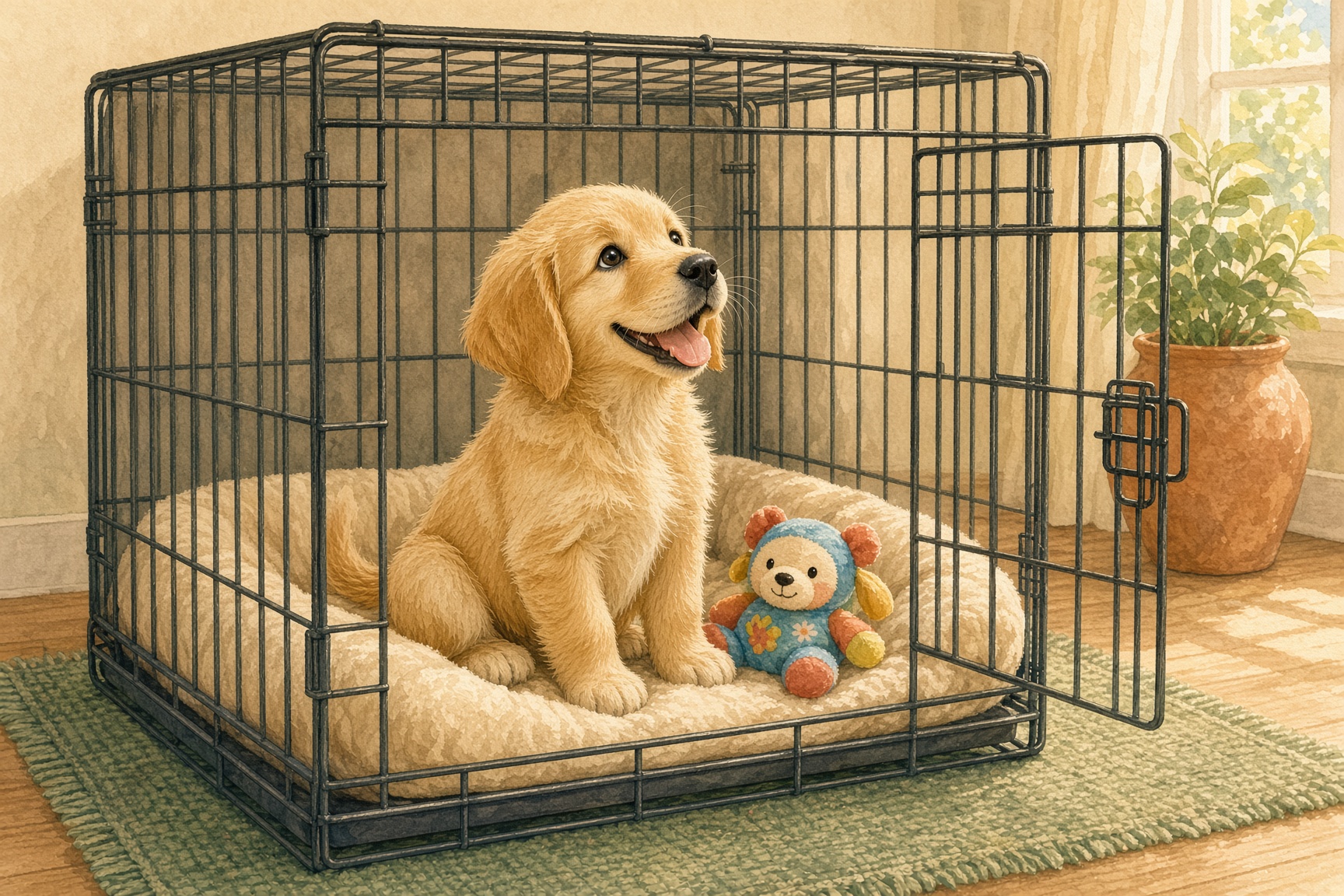
Choose a crate just large enough to stand, turn, and lie down. Extra floor becomes a bathroom. Place it where the family spends time. Add a washable bed and one safe chew. Door stays open during the first introductions; closed-door rests come after meals and potty trips on Day 3.
Hold-time is roughly one hour per month of age, plus one. An eight-week-old puppy still needs very frequent outdoor trips even with a perfect crate.
Same door, same spot, same cue, same reward timing — every day of the week.
Praise and food for outdoor success. No rubbing noses, no scolding after the fact.
If you cannot watch, they are in a crate or pen. Unsupervised roaming creates accidents.
Treats land on the grass within a second of finishing. Delayed rewards train the wrong moment.
Pick a cue (“go potty”) and have every person in the home use it.